

And Again, and Again
The exhibition "And Again, and Again" extends beyond the architectural structure of the Museum for Islamic Art and Cultures of the East, drawing inspiration from it. It focuses on visual and musical expressions of patterns and repetition in art, offering interpretations of their significance—from connections to mysticism and the concept of infinity in Eastern culture to rational and structural representations in the West.
In Islamic culture and among Eastern societies, repetition expresses divine perfection. Complex geometric patterns, such as mashrabiya, characterized by symmetry and mathematical order, reflect a timeless logic associated with the divine, aligning with the prohibition on depicting human figures in religious contexts.
Geometric and mathematical patterns also play a role in Western artistic traditions. During the Renaissance, repetitive designs emphasized harmony and order, embodying a rational worldview. By the late 19th century, with the rise of modernism, the pursuit of innovation and simplicity led to the rejection of ornamentation. However, in the 21st century, decorative trends have experienced a revival, driven by technologies that integrate pattern-based ornamentation with functionality.
Repetition and multiplicity can also be interpreted socially: recurring elements sharpen the distinction between the individual and the collective, yet they also blur these boundaries when the group provides meaning to the individual as part of a whole. In Eastern cultures, decorations such as arabesques, based on repeating patterns, symbolize equality in individual contributions to the collective. In contrast, Western 20th-century culture often reflected an emphasis on individuality through asymmetry, highlighting personal uniqueness and the ability to break away from conventions.
The works in the exhibition explore repetitive patterns in various manifestations, emerging from the artistic processes and themes that concern the participating artists: tradition and its influence on identity, fear of emptiness (horror vacui) driving compulsive action, architectural contexts of construction and destruction, spiritual aspects of the creative process, relationships between the individual and the group, gender, and the ability of objects to carry cultural significance.
"And Again, and Again" invites viewers to trace the repeated actions and motifs within the works, adding their own unique interpretive layer.
Curator: Tal Bechler
Artists:
Nadine Bar Noy, Rami Tarif, Miriam Kabessa,
Talia Mukmel, Aviad Sinemans,
Daniel Feldhaker, Lila Klinger,
Ronen Sheharbani, Amir Tomashov

Ruthie de Vries, Bag of Tears, installation photography: Heli Yozvitz.
תפיסת ׳הציור כחלון׳ היא תפיסה שגורה בתולדות האמנות המערבית ושורשיה מצויים בציורי נוף מהרנסנס. ציורי נוף, בעזרת חוקי הפרספקטיבה, יוצרים תחושת עומק ונראים כחלונות דרכם ניתן להתבונן בעולם. החל מסוף המאה ה-19, ציירים רבים זנחו את מסורת הציור הפיגורטיבי ופנו להפשטה. השאיפה לפרספקטיבה ריאליסטית והנסיון לחקות את המציאות הוחלפו בחתירה לעבר שטיחות, לצד עיסוק בקו, צבע וצורה. בתערוכה ׳שק דמעות׳ רותי דה פריס ממשיכה את עבודתה עם טקסטיל ואת עיסוקה ביחסים בין עומק ושטיחות, ומתכתבת באחת עם ציורי ׳מראה מחלון׳ ועם המופשט הגיאומטרי המודרניסטי.
התערוכה מתבססת על שני סיפורים שלמדה דה פריס בתכנית העמיתים של עלמא: האחד מהתלמוד והשני מספרות הפוראנות ההודית. האגדה התלמודית מספרת על רב רחומי שלא הצליח לאזן בין בית המדרש לבין ביתו הממשי, ועל אשתו הממתינה לבואו. בסיפור ההתגלות של האל קרישנה, המתואר כילד שנוהג לאכול בוץ, אמו מביטה לתוך פיו ורואה בו את היקום כולו, ואף את ביתה ואת עצמה באחת מפינותיו. העבודות בתערוכה מאמצות את מבטן של דמויות הנשים חסרות השם שבסיפורים, ומציעות פרשנות דרך סגנונה הייחודי של דה פריס ודרך מוטיבים הקיימים בעבודתה משכבר כמו החור, האישה והבית.
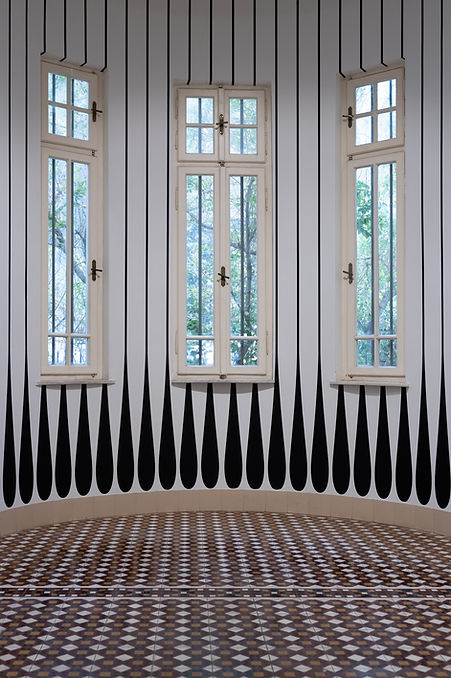
Ruthie de Vries, Bag of Tears, installation photography: Heli Yozvitz.
השימוש המזוהה איתה בדפוסים (פאטרנים), בולט בעבודת הקיר ׳דמעות׳, בה צורת הדמעה משוכפלת לכדי טפט אורנמנטלי המגיב לרצפות המצוירות ולציורי התקרה של הבית ההיסטורי בו יושבת עלמא. עבודה תלוית מקום נוספת היא ׳חלונות׳, בה דה פריס משכפלת את חלון הטרקלין ומפרקת אותו לחלקים. היא שואבת השראה מצורות החיפוי, התריסים והסורגים ומתרגמת אותם לקווים וצורות המרכיבים קומפוזיציה גיאומטרית מופשטת, אך כזו שאינה שואפת לשטיחות. צבעי היסוד מוחלפים בטקסטיל; רצועות בד, חגורות ואבזמים מתוחים ומוחזקים על גבי המצע, עוטפים ומכסים אותו.
כך, אל מול הגריד המודרניסטי השטוח והיציב, דה פריס מציעה שכבות ופיגומים רעועים, ובתוך המופשט - הלכאורה חופשי מייצוג המציאות - היא שוזרת אובייקטים קונקרטיים כמו מטפחות, מעטפות או קופסאות גפרורים, כאלגוריה לחוסר מימוש אהבתם של הזוג רחומי. מבטה של האישה צופה מן החלון בעולם לא יציב, עולם שהסדר שלו הופר והדברים בו מצויים בנפילה מתמדת. היא מורידה מעינה לא דמעה אחת, כי אם שטף דמעות גדול שבכוחו למוסס את ההפרדה בין פנים לחוץ.
